
Cat breed weight guide
Siamese Cat Weight Chart
The Siamese gets misread in both directions. Owners often think the breed is too thin because the oriental frame is naturally narrow, but the same breed is also over-represented in feline diabetes datasets, which makes accurate weight management unusually important.
By Paws & Pounds Research Team — reviewed against WSAVA/AAHA guidelines. Last updated .
Quick answer
A healthy adult Siamese typically sits between 3–5.5 kg, with many pet Siamese around 3.5–4.5 kg. The breed should look lean, so confirm with Body Condition Score and consult your veterinarian before changing your cat's diet.
Ideal weight range means less than most owners expect
Siamese cats are bred to a long, fine-boned, athletic frame. That means the healthy adult range is narrower and usually lower than owners expect when they are mentally comparing their cat with a stockier domestic shorthair.
A smaller female around 3.4-3.8 kg can be perfectly healthy at BCS 5/9, while a male over 5.5 kg is often carrying extra fat rather than just being large-framed. The scale matters, but the silhouette and rib feel matter just as much.
Why this breed gets overfed so easily
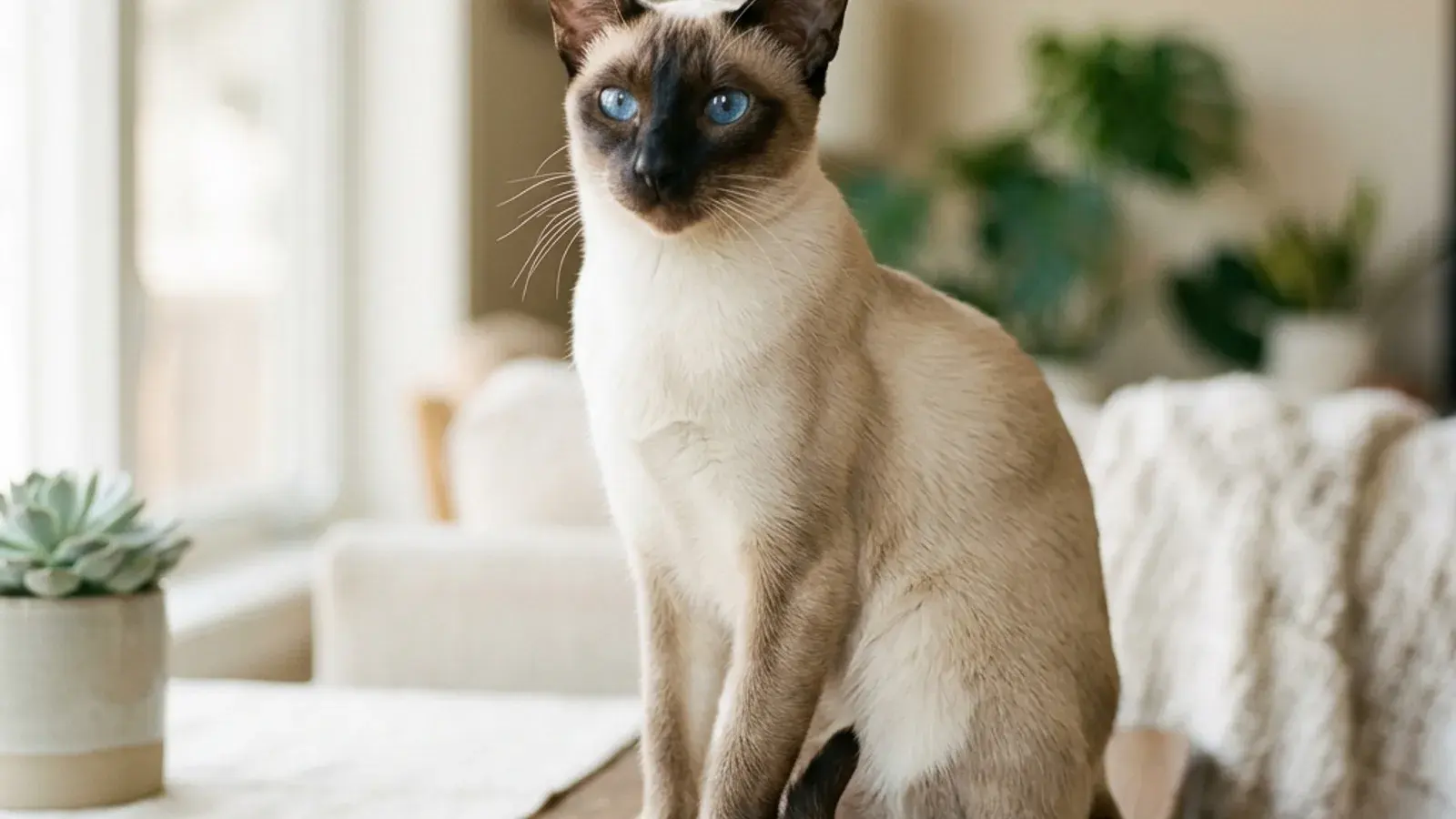
First, the breed's oriental body type reads as “too skinny” to many owners even when it is normal. Long legs, a clear waist, a deep flank, and thin fat cover are part of the standard look.
Second, Siamese cats are vocal and interactive. Owners often interpret that constant conversation as hunger. In practice, treating every vocal demand as a feeding cue is one of the fastest ways this breed drifts upward in body condition.
Why weight control matters even more in Siamese cats
Siamese-derived breeds appear frequently in feline diabetes risk discussions, which makes excess body weight more than a cosmetic issue. Keeping a Siamese at BCS 4-5/9 from early adulthood onward is one of the simplest ways to reduce a major modifiable risk factor.
If your Siamese is losing weight despite a normal or increased appetite, or if thirst and urination are rising, consult your veterinarian rather than assuming the diet is finally working.
Calorie planning for a vocal, active breed
Start with Resting Energy Requirement and build from a target weight that matches ideal body condition. For many indoor neutered Siamese, the workable range is near the middle of the normal maintenance band, but the exact answer depends on actual activity rather than breed stereotype.
Build the feeding plan with the cat calorie calculator, measure food in grams, and avoid handing out extra calories every time the cat starts talking. Consult your veterinarian before changing your pet's diet if diabetes, unexplained loss, or other symptoms are in the picture.
Red flags that mean see your vet now
- Weight loss with increased thirst or appetite can fit feline diabetes or hyperthyroidism and needs a workup.
- Refusing food for more than 24 hours is unsafe in cats and should not be handled by just changing the food bowl.
- Rapid weight gain after neutering means the calorie plan likely needs to be rebuilt rather than ignored.
Four-step assessment protocol
Start by trusting the breed shape
A Siamese at ideal condition often looks lean to owners used to heavier domestic-shorthair silhouettes. Confirm with touch before increasing food.
Use Body Condition Score, not vocal behaviour
Ribs should be easy to feel under a thin fat cover and the waist should be obvious from above. Begging is common in this breed and is not a reliable hunger signal.
Set calories from a target weight
If your cat is overweight, calculate from the BCS-appropriate target rather than current weight and adjust portions in measured grams.
Escalate quickly if weight is dropping unintentionally
Because Siamese-derived breeds are over-represented in diabetes data, unexplained loss, thirst change, or ravenous appetite should prompt a veterinary workup.
Siamese weight FAQ
- What is a healthy adult weight for a Siamese cat?
- Roughly 4-5.5 kg for males and 3-4.5 kg for females. The Siamese is naturally slim and looks lighter than it is, so a 4 kg Siamese is not automatically underweight.
- Why does my Siamese look so skinny?
- The oriental body type has long legs, fine bones, and a deep flank, so a healthy Siamese often looks leaner than a domestic shorthair at the same Body Condition Score.
- Are Siamese cats prone to diabetes?
- Surveillance data has repeatedly placed Siamese-derived breeds in an elevated-risk group for feline diabetes, with excess body weight after neutering being one of the main modifiable contributors.
- My Siamese begs constantly. Should I feed more?
- Usually no. Siamese cats are famously vocal and food-focused, and begging often reflects temperament rather than a real calorie deficit. Use measured grams, not bowl-emptying behaviour, to decide portions.
- How fast should an overweight Siamese lose weight?
- Aim for about 0.5-1% body-weight loss per week. Faster loss increases the risk of hepatic lipidosis, which is dangerous in cats of any breed.
Sources & further reading
- Royal Veterinary College VetCompass — Royal Veterinary College, University of London
- Banfield State of Pet Health Reports — Banfield Pet Hospital
- WSAVA Global Nutrition Guidelines — World Small Animal Veterinary Association
- 2014 AAHA Weight Management Guidelines for Dogs and Cats — American Animal Hospital Association